Discover Hidden Electrical Issues with Infrared (IR) Thermography

There are two ways to operate: you can schedule maintenance, or your equipment will eventually schedule it for you (usually at 2:00 AM on a holiday weekend).
Unlike mechanical problems, which can have symptoms like grinding, squeaking, and vibrating before failing, electrical issues often give no visual or audible signs. Equipment can operate at 99% capacity one moment and fail catastrophically the next.
Equipment failure and downtime are expensive. A rigorous IR program isn’t just about good engineering practices (and alignment with NFPA 70B); it's a critical business strategy.

1. The "Silent" Failure Mode
Electrical failures are the result of slow, cumulative processes like thermal cycling, creep, oxidation, and vibration. A connection might be 10% loose for years, generating a small amount of heat that goes unnoticed.
Equipment appears to run smoothly:
Panels look fine
Loads run normally
Breakers don’t trip
Temperatures feel normal to the hand
So nothing triggers action. Meanwhile, issues accumulate sight unseen.
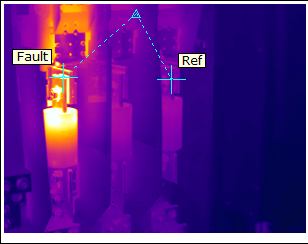
With a professional Infrared (IR) Thermography Electrical Safety Inspection, hidden problems are revealed. Using a professional, high resolution professional-grade IR camera, a trained technician reviews the heat signatures of your equipment.
The hot spots don't magically appear: they are important early stress signals caused by loose or degraded connections. Infrared inspections can reveal them weeks or months before they fail, allowing you to tighten screws and adjust equipment during a planned shutdown rather than replacing a damaged or melted switchgear panel after an emergency fire.
2. The True Cost of Downtime
The cost of an electrical failure is almost never just the cost of the replacement part. It is the cost of:
Lost Production: Every minute the power is out, revenue stops.
Emergency Labor: paying electricians double-time for emergency call-outs.
Collateral Damage: A hot-spot can melt insulation or contribute to an ignition event, either of which represents additional expense to replace.
When repairs happen in an emergency, the goal is speed, not precision. This is a very different environment than a planned, considered repair where time allows for careful decisions and fewer missed details.
3. Energy Efficiency
Heat is energy. When a loose or oxidized connection creates resistance, it increases I²R losses, converting electrical energy into heat instead of useful work. These energy losses rarely trigger alarms or cause immediate failures, which allows them to persist quietly for months or years.
A "hot spot" is literally electricity being converted into waste heat rather than powering your load.
By identifying abnormal heating at connections, conductors, and components, professional Infrared (IR) Thermography Electrical Safety Inspections reveal where energy is being lost continuously or intermittently during normal operation.
4. Compliance and Insurability (NFPA 70B)
This is an area of recent change. In 2023, NFPA 70B (Standard for Electrical Equipment Maintenance) was upgraded from a "recommended practice" to a formal standard written with enforceable 'shall' language.
Minimum inspection intervals are generally 12 months, less for high-risk equipment.
12-month intervals depend on:
Equipment type
Risk profile
Adoption by insurers, owners, or AHJs
With High risk “Condition 3”: the equipment is no longer simply “aging” or “in need of routine maintenance” — it represents an elevated likelihood of failure and therefore requires more frequent inspection and prompt corrective action.
Condition 3 is commonly interpreted as requiring at least 6-month IR inspection intervals, rather than a hard universal rule.
The Value of a Professional IR Inspection
Because electrical problems tend to fly under the radar, scheduling a professional IR electrical safety inspection at the recommended intervals is the best way to expose problematic heat patterns before they cause trouble.
You may wonder whether your staff can conduct annual infrared inspections in-house. The answer is, "it depends." Guidant Power's Infrared (IR) Thermography Electrical Safety Inspections are conducted using high resolution, professional cameras by highly trained thermographers. Meeting the high standards required by NFPA 70B depends a lot on the camera type and technician training. If you're considering in-house inspections or would like to learn more about our training options, get in touch.

Guidant Power Infrared (IR) Thermography Electrical Safety Inspections reliably reveal:
Loose or degraded connections
Identified through comparison, not color alone.
Phase imbalance
Uneven heating that signals developing system stress.
Overloaded conductors or equipment
Separated from normal operating temperatures.
Failing breakers and terminations
Revealed through abnormal thermal patterns.
Transformer and bus anomalies
Including internal issues with no audible warning.
Problems developing over time
Tracked through baselining and trending.
A high-resolution infrared camera captures heat patterns in detail.
A professional inspection translates that heat into actionable risk because it reveals hidden electrical problems before they schedule your next outage.
Infrared (IR) Thermography Electrical Safety Inspections as a Complement to Arc Flash Analyses
Regular, professional IR inspections reduce the long-term chances of electrical incidents. When developing thermal issues are identified and corrected early, electrical systems remain closer to their intended condition.
As a result, scheduled arc flash evaluations are less likely to reveal major deficiencies or unexpected increases in risk, helping prevent small, invisible problems from growing into larger findings over time.
The Bottom Line
Electrical equipment does not heal itself. It degrades from the moment it is energized. Infrared scanning is one of the easiest ways you can identify that degradation. It shifts your facility from a posture of "react and repair" to "predict and prevent."
Professional infrared inspections give you visibility into risks that would otherwise remain hidden, so you can correct issues now instead of under duress. Over time, this reduces unplanned downtime, stabilizes electrical systems, and limits the compounding problems that surface during major evaluations.
Instead of quite literally “having to put out fires”, choose prevention. Recognize deterioration early, then act on it while you still have control.
70E®, Standard for Electrical Safety in the Workplace®, NFPA 70®, NEC®, and National Electrical Code® are registered trademarks of the National Fire Protection Association, Quincy, MA. All rights reserved. This informational material is not affiliated with nor has it been reviewed or approved by the NFPA.