
Does Safety Training Qualify or Certify My Employees?

Update to article published in 2019 to Rozel site
We are often asked: “Does your electrical safety training qualify or certify someone to work on electrical equipment?” It's a logical question to ask.
The short answer is no, and here’s why.
The electrical safety regulation that all general industry employers must follow is OSHA 1910 Subpart S. Many U.S. employers also implement an electrical safety program that complies with NFPA 70E. In either case, the requirements for qualifying employees to work on or near electrical equipment are the same.
Although electrical safety training is required, training alone is not sufficient to make an employee qualified.
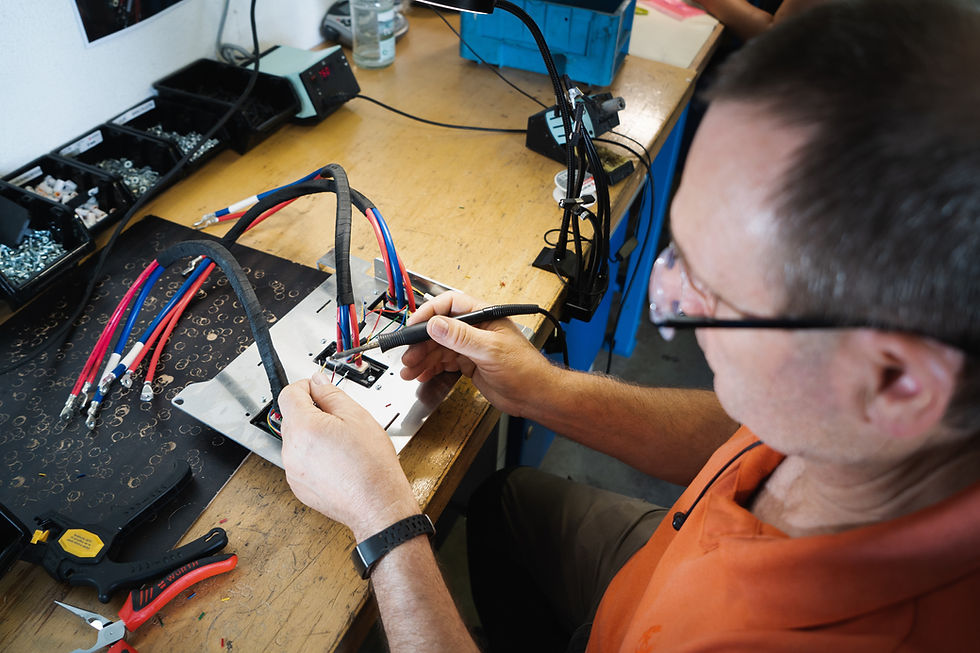
What OSHA Means by “Qualified”
OSHA 1910.332 outlines the requirements for electrical safety training. The standard distinguishes between qualified and unqualified workers and specifies that different levels of training are required based on the hazards an employee may be exposed to.
To fully understand what OSHA means by qualified, employers should review the definition found in OSHA 1910.339, Definitions Applicable to This Standard:
Qualified person: One who has received training in and has demonstrated skills and knowledge in the construction and operation of electric equipment and installations, and the hazards involved.
This definition makes an important distinction: a worker must be competent in both technical skills and electrical safety to be considered qualified. Because electrical safety training does not evaluate or validate an employee’s technical abilities, it is only one piece of the qualification process—not the whole solution.
What Qualified Electrical Workers Must Be Able to Do
OSHA further describes qualified persons in 1910.332(b)(3) as those permitted to work on or near exposed energized parts. At a minimum, these employees must be trained to:
Distinguish exposed live parts from other parts of electrical equipment
Determine the nominal voltage of exposed live parts
Identify safe approach distances and the corresponding voltages to which they may be exposed
What Type of Training Is Required?
According to OSHA 1910.332(c):
Training may be classroom-based or on-the-job
The degree of training must be determined by the risk to the employee
Minimum Compliance Does Not Always Ensure Safety
It is important to remember that meeting minimum regulatory requirements does not always ensure adequate protection. Simply following the baseline training outlined in 1910.332(b)(3) may be insufficient in many (often, most) work environments.
For example, employees working in or around equipment capable of producing an arc flash face additional hazards. In these cases, we recommend training qualified workers in accordance with NFPA 70E Article 110.4, which calls for a more comprehensive level of electrical safety training. This includes risk assessment and safe work practices for both shock and arc flash hazards.
When in doubt, employers should consult a reputable electrical safety training firm or organization, such as Guidant Power, that is well versed in OSHA and NFPA requirements.
The Employer’s Responsibility
Because the employer understands:
The technical skills required to perform the work
The specific electrical hazards present
The appropriate level of safety training needed
Only the employer can determine who is qualified and who is not.
Why Certificates of Completion Matter (and What They Don’t Do)
Most electrical safety training providers issue a certificate of completion when a student successfully finishes a course. These certificates simply document that the employee has completed formal electrical safety training. They do not qualify or certify an employee to perform electrical work. However, they should be retained alongside other training records to demonstrate proficiency in the required safety practices.
Need More Information?
OSHA provides extensive guidance on training requirements in its publication Training Requirements by Standard, available here:
70E®, Standard for Electrical Safety in the Workplace®, NFPA 70®, NEC®, and National Electrical Code® are registered trademarks of the National Fire Protection Association, Quincy, MA. All rights reserved. This informational material is not affiliated with nor has it been reviewed or approved by the NFPA.


