
The Hidden Work That Keeps Facilities Safe

Updated: Dec 30, 2025
A Conversation with Jesse Walker, Electrical Technician at Guidant Power
Most people never see the precise, solitary work that goes into preventing electrical accidents. Yet for technicians like Jesse Walker, that behind-the-scenes diligence is a way of life.
Jesse travels across the country conducting field data collection for arc flash analyses, ensuring that every hazard label Guidant Power produces is built on precise, firsthand information.
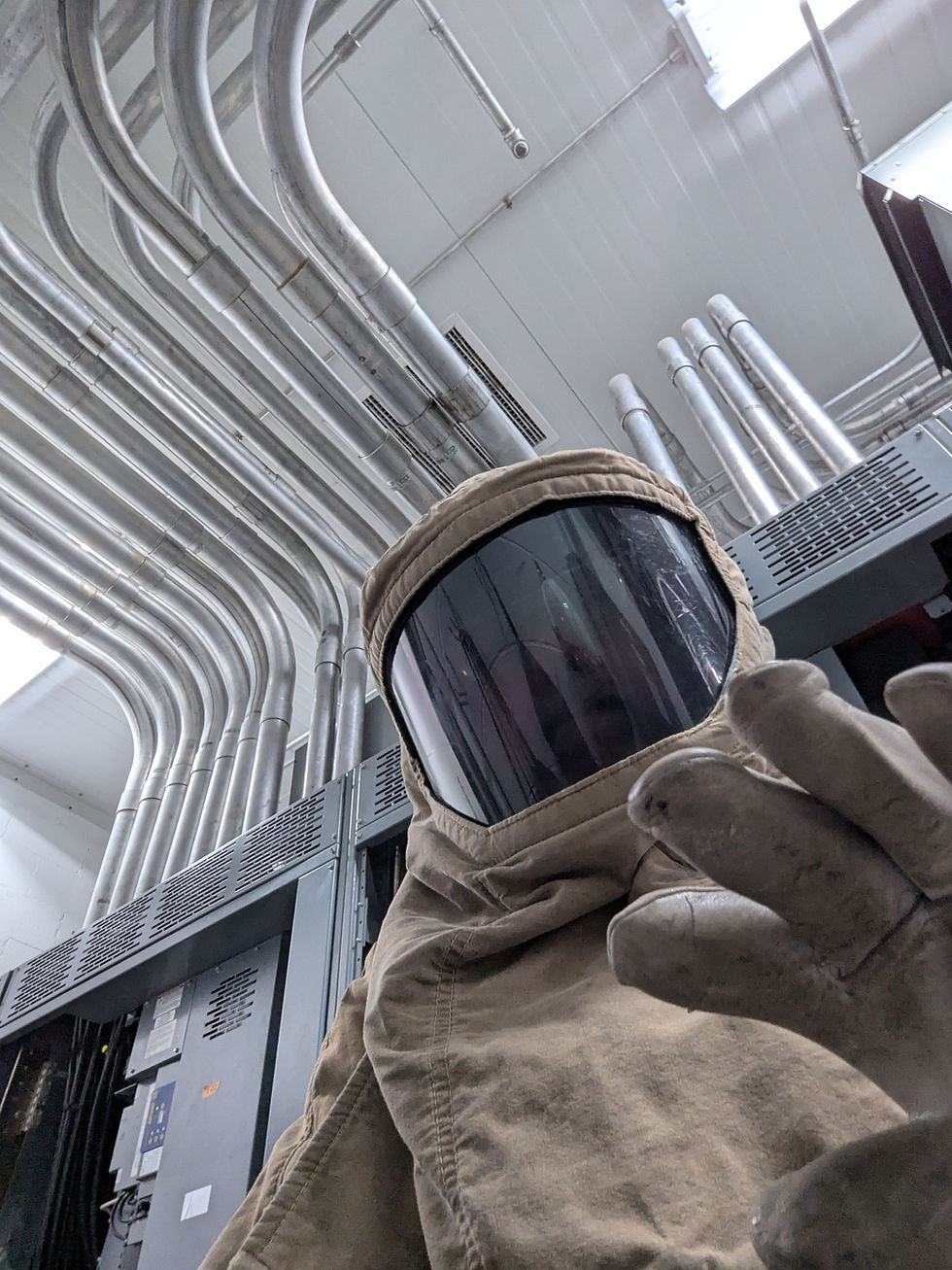
We sat down with Jesse to talk about what his days look like, what safety looks like in the field, and how his initiative and problem-solving skills helped him modernize the way inspections are done.
Guidant Content Team:
You spend a lot of time on the road. What does a typical week look like for you?
Jesse Walker:
Most weeks start early Monday morning at the airport. I travel with two checked bags, both right under fifty pounds, plus my backpack. By the time I land and drive to the site, I’ve got a full setup ready to go.
Every facility is different. Some I’ve never seen before, so it starts with a quick safety briefing, signing in, maybe a tour. Then I get to work opening equipment, taking photos, and making drawings so the engineers can build the model.
Guidant:
For people who haven’t seen an arc flash inspection, what exactly are you doing on site?
Jesse:
My job is to be the engineers’ eyes and ears.
I look at how the electrical system is put together — panels, disconnects, transformers, all that — and document it carefully.
It’s not heavy-tool work. Mostly I’m using a screwdriver, a flashlight, and a tablet. But it’s detailed. You have to take clear photos, label them, and keep your notes organized so that later, when we print the arc flash labels, we know exactly where everything belongs.
Guidant:
What’s the most important part of your job from a safety standpoint?
Jesse:
Slowing down. That’s the hardest part for a lot of people because you’re trying to stay efficient, but one mistake can change everything.

When I first started, a brittle plastic piece broke inside a panel and tripped a breaker hard enough to shut down half the plant. My glove got a black mark, but I was OK. It was a reminder to never cut corners on safety procedures. I test my gloves every morning, check my PPE, and think before I touch anything. You build those habits so they stick even when no one’s watching.
Guidant:
You mentioned using a tablet. We heard you helped move the process from paper to digital — how did that happen?
Jesse:
When I joined Guidant Power, most of our work was still done on paper. We’d print out big blueprints, mark them up by hand, and haul them from room to room. It worked, but it wasn’t efficient — and if you lost a page or a photo got mislabeled, you could waste a lot of time.
So I bought a tablet and started experimenting. At first, it was just me trying to figure out how to draw on schematics and keep my photos linked to the right equipment. Eventually, I built a system with color-coded markups, photo folders, and real-time updates. Now it’s second nature.
I'm proud to say this:
The updated Guidant Power data collection system we've developed through the years is highly logical, efficient and precise, benefiting the whole arc flash crew and customers alike.
Whether it's me or any technician joining the team, we can handle even complex jobs without losing track of any details.
Guidant:
That's a great example of putting your experience and creative thinking to good use! Next, let's talk about travel. You’ve seen a lot of different places over the years. Any stand-out experiences?

Jesse:
Oh, plenty. I’ve been in spotless dairy plants where you change clothes just to walk through a door, and I’ve been in remote lift stations where the “office” is the front seat of the truck.
I’ve seen redwoods in California, bison in Utah, snowdrifts in North Dakota — you name it. The travel can wear you out, but it’s worth it. You get to see how much people rely on electricity to keep everything running, and you realize your work helps protect them.
Guidant:
What do you think people misunderstand about what you do?
Jesse:
A lot of folks think an arc flash analysis is just about compliance, checking a box. But there’s a lot more to it. Every photo, every drawing, every label is a piece of someone’s safety plan.

The absence of accidents doesn’t mean a place is safe; it just means they’ve been lucky so far. What we do helps take luck out of the equation.
Guidant:
What keeps you motivated after all these years on the road?
Jesse:
I like knowing that what I do makes a difference. You walk into a plant on Monday not knowing anything about it, and by Friday you’ve built a picture that helps people stay alive. That’s my main motivation. Plus, I enjoy seeing new places. Sometimes, the work is outdoors, which also keeps it interesting.

Guidant Power:
At Guidant Power, we know electrical safety depends on the unseen effort — the hours of careful observation, documentation, and follow-through that happen long before a label is applied. Technicians like Jesse Walker make that possible through professionalism, patience, and a genuine commitment to doing things right.
If you're an industrial electrician interested in joining the arc flash analysis field team, check out our current openings. Or, learn more about Guidant arc flash analysis services here.
